
Programmatic advertisers have spent years building campaigns around audiences: people who visited a site, purchased a product, belonged to a demographic group or displayed a particular behavior. Those signals still matter, but they are not always available, portable or appropriate for every campaign.
Contextual targeting takes a different route. It asks what the user is reading, watching or listening to at the moment an impression becomes available. That makes it useful for prospecting, privacy-aware media planning and campaigns in which the environment is part of the message.
Quick answer: Contextual targeting in programmatic advertising matches ads to the subject, language, format or meaning of the content surrounding an impression. Instead of relying primarily on a user’s browsing history, an advertiser can target relevant keywords, categories, genres, apps, videos or publisher environments. It works best when positive context, exclusions, inventory quality and measurement are planned together.
Which contextual targeting method should you use?
Campaign need | Best starting method | Example | Main risk to control |
|---|---|---|---|
Broad category reach | Category or taxonomy targeting | A travel brand targets travel and tourism content | Categories may be too broad or slow to reflect breaking news |
Precise product relevance | Positive keyword or semantic targeting | A cybersecurity platform targets content about zero-trust architecture | Overly narrow lists can restrict delivery |
Premium publisher alignment | Curated publisher list, PMP or contextual deal | A finance advertiser buys approved business publications | A publisher name alone does not guarantee page-level relevance |
Video or CTV relevance | Genre, channel, video metadata or content category | A sportswear brand runs around fitness and live-sports content | Content-level signals vary by publisher and exchange |
Brand protection | Suitability controls plus exclusions | An airline excludes disaster and accident coverage | Negative keywords alone are not a complete brand-safety system |
Regulated or sensitive sectors | Approved inventory plus conservative contextual inclusions | A healthcare brand targets educational wellness content | Relevance does not replace legal, consent or platform-policy review |
The most reliable campaign usually combines two or more methods. A category can establish reach, a keyword set can add precision, a publisher list can improve quality and exclusions can remove unsuitable contexts. Treat the matrix as a starting point, not as a substitute for inventory forecasting and placement review.
What is contextual targeting in programmatic advertising?
Contextual targeting is the practice of evaluating the content or environment associated with an ad opportunity and bidding when that context matches the advertiser’s rules. The rule may refer to a topic, keyword, semantic meaning, language, content genre, app classification, publisher, URL, video metadata or another content-level signal.
For example, a business-travel platform could target articles about corporate travel management, videos about airport productivity and business-news sections that reach decision-makers. The campaign does not need to begin with a list of previously identified individuals. It begins with relevant media moments.
This is not the same as buying a publication because its average reader looks desirable. Publisher selection works at a site, app or deal level. Page-level contextual targeting attempts to determine whether the specific article, video or content object is relevant. Strong plans often use both: approved supply for quality and page-level signals for relevance.
The IAB Tech Lab describes its Content Taxonomy as a common language for describing content, with contextual targeting and brand safety among its typical uses. A common taxonomy helps buyers, sellers and technology partners communicate categories consistently, although every platform may implement or supplement taxonomies differently.
How does contextual targeting work?
When an impression becomes available, the buying platform receives information that may describe the page, app, video, audio stream or ad slot. Depending on the inventory and integration, a platform or contextual data provider can evaluate:
page text, headline, URL and metadata;
app-store descriptions or app-level classifications;
video titles, descriptions, channels, categories or genres;
audio, podcast or content-genre metadata;
language, sentiment or semantic meaning;
publisher, domain, app bundle and placement type;
brand-safety and suitability classifications.
The DSP then evaluates the available signal against the line item’s inclusion and exclusion rules. If the impression matches and also passes geography, device, frequency, budget, creative and inventory controls, the platform can bid.
Google’s current DV360 documentation states that contextual keyword targeting can check website content, app-store descriptions and video metadata. It also distinguishes positive keywords from negative keywords. Category targeting is broader: it groups content into market verticals and subcategories. Google notes that some recent events may take several days to become targetable through categories, which is one reason breaking-news campaigns need active placement review.
How is contextual targeting different from audience targeting?
Method | Primary question | Typical signal | Best use |
|---|---|---|---|
Contextual targeting | What content is this impression associated with? | Keywords, topic, genre, page or video metadata | Prospecting, relevance and privacy-aware reach |
First-party data activation | Is this person or device connected to an advertiser relationship? | Customer list, CRM event, site or app interaction | Retention, suppression, remarketing and customer modeling |
Behavioral or interest targeting | What has this user or device appeared interested in over time? | Observed actions or modeled interest | Audience discovery and scalable prospecting |
Placement targeting | Where exactly should the ad run? | Named site, app, channel, deal or URL | Control, sponsorship and premium environments |
These methods are not mutually exclusive. A contextual line item can still use geography, device, frequency and supply controls. A campaign can also compare a contextual prospecting line against an audience-led line. What matters is preserving the distinction in reporting so that the advertiser can see which signal created value.
For a deeper audience-led approach, see How to Use Audience Segmentation in DV360. For account-based use cases that combine intent and company signals, read the B2B ABM Programmatic Guide.
Is contextual targeting cookieless?
Contextual targeting can select inventory without relying on a third-party cookie or a historical behavioral profile. That is why it is frequently described as a cookieless targeting method. The impression can be evaluated because of the content surrounding it, not because the buyer recognizes the individual viewing it.
However, “contextual” should not be used as shorthand for “automatically compliant” or “no data processing.” Ad delivery, fraud prevention, frequency management, conversion measurement and publisher operations can still involve identifiers or other data. Requirements differ by market, device, publisher and implementation.
Practical rule: separate the question “How did we select the impression?” from “What data does the full advertising and measurement chain process?” Contextual targeting answers the first question. Legal review, consent management and vendor governance still need to answer the second.
Why does contextual targeting matter in 2026?
Advertisers need strategies that can operate across browsers, mobile apps, CTV and premium publisher deals without assuming one identity signal is consistently available everywhere. Contextual targeting supplies a portable planning concept: align the message with the media environment, then adapt the available controls to each channel.
It also gives advertisers an independent prospecting method. If every line item is built from the same audience seed, measurement can become circular: the campaign finds people who resemble existing customers and then reports that they behave like existing customers. Contextual lines can test whether relevant environments create incremental reach or response.
Contextual relevance can also improve the creative brief. A generic ad has to work everywhere. A contextual campaign can prepare variants for different content groups—for example, cost-control messaging beside finance content, security messaging beside risk content and productivity messaging beside operations content.
How do DV360, Amazon DSP and Adform support contextual activation?
Platform | Practical contextual role | Planning advantage | What to verify |
|---|---|---|---|
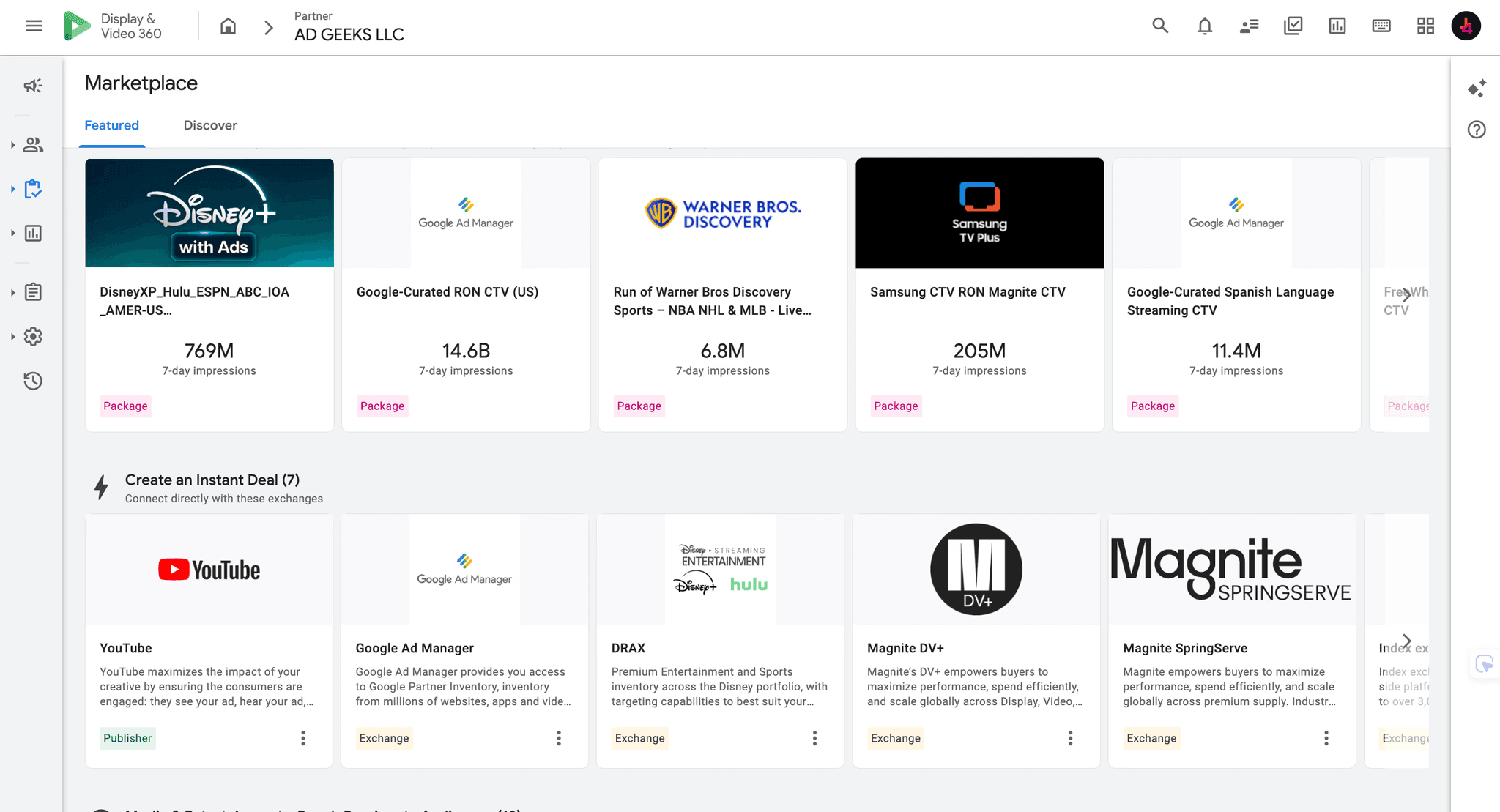
Display & Video 360 | Keyword, category and other content controls across eligible web, app, video and CTV inventory | Clear native controls, Google inventory relationships and combined audience/content planning | Signal availability by line-item type; forecast after every restrictive layer |
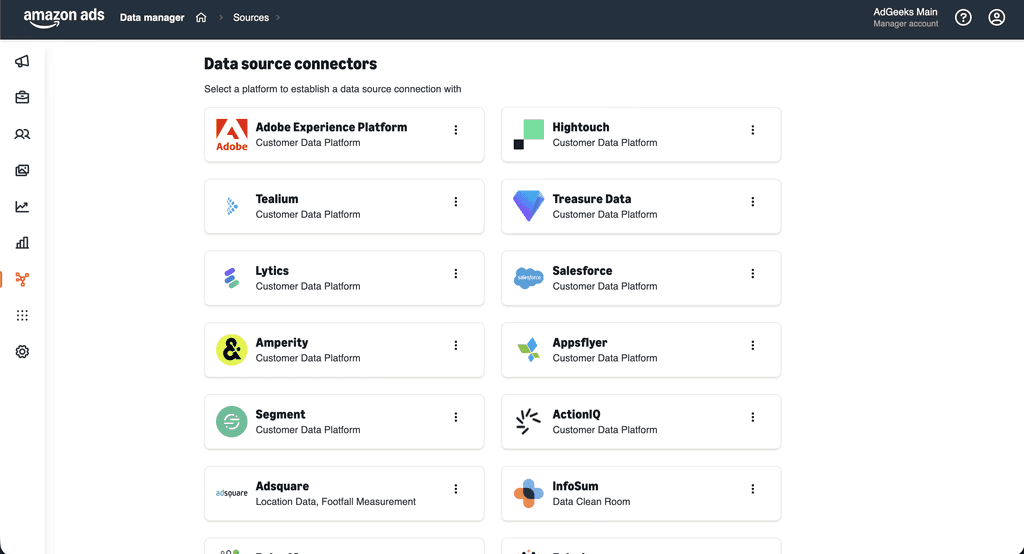
Amazon DSP | Contextual activation through eligible Amazon-owned and third-party supply, deals and available inventory controls | Can combine relevant environments with Amazon Ads audiences and measurement where available | Exact page-, genre- or deal-level controls by market, supply source and account |
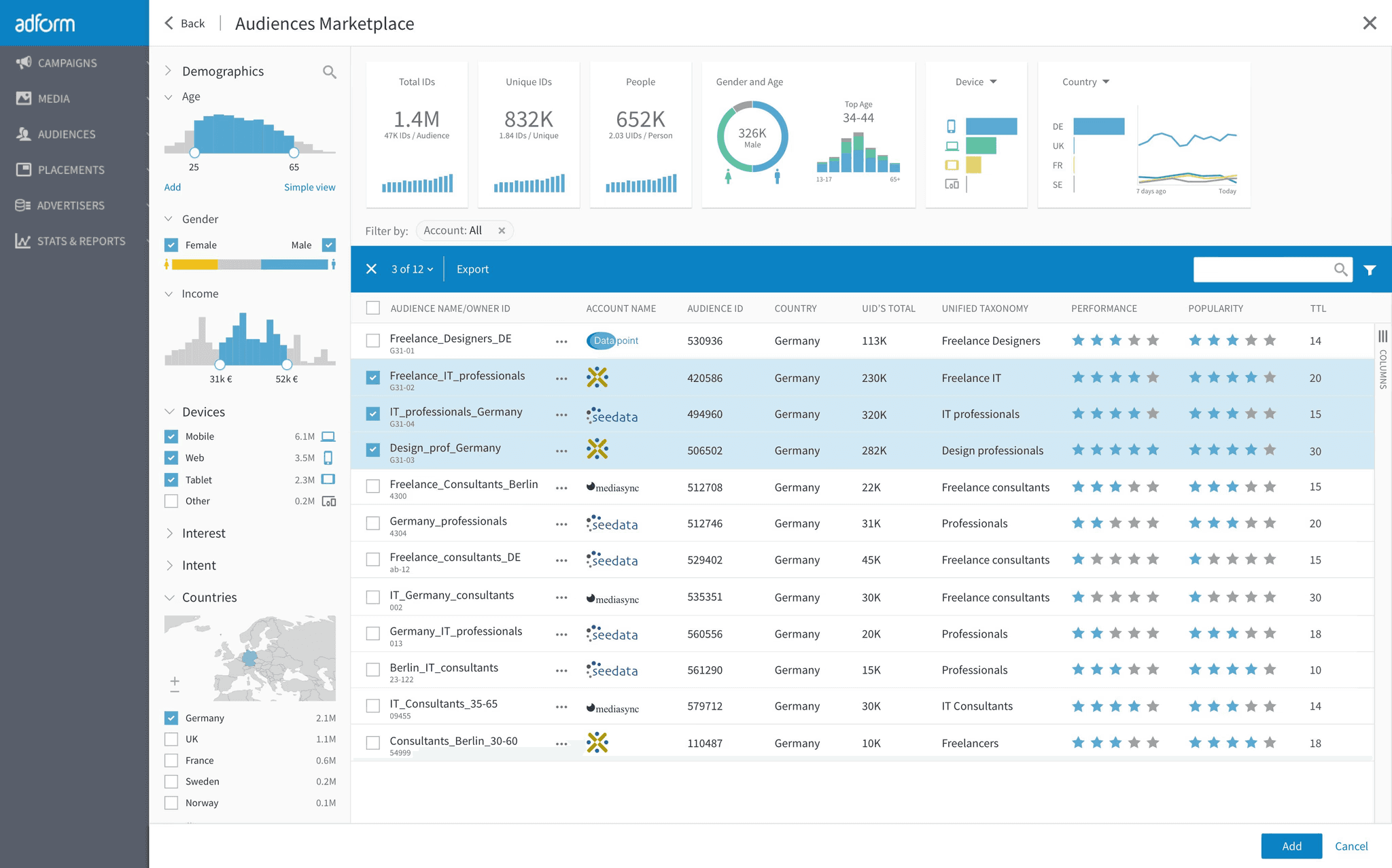
Adform | Contextual segments and classifications available through platform capabilities, marketplace partners or configured integrations | Flexible independent-DSP activation across markets and publisher supply | Provider, taxonomy, language coverage, freshness, fees and seat-level availability |
DV360 provides the clearest public documentation for native keyword and category controls. Its keyword targeting documentation warns that app content may sometimes be categorized by the app’s main function rather than the content currently visible inside the app. That limitation matters: app-level relevance is not always equivalent to page-level web relevance.
For Amazon DSP and Adform, contextual capabilities should be scoped at the actual inventory, deal and account level. Do not write “semantic targeting included” in a media plan without recording which signal provider, taxonomy, languages and supply types are included. Platform logos do not guarantee identical contextual coverage.
Teams activating more than one platform should document the difference in a shared media plan. The Multi-DSP Matrix explains how to coordinate DV360, Amazon DSP and Adform without treating them as isolated buying systems.
How should you build a contextual campaign?
1. Define the content moment, not only the audience
Write a sentence describing when the message is useful. “Reach IT leaders” is an audience brief. “Reach readers evaluating cloud-security architecture” is a contextual brief. The second statement can guide categories, keywords, publisher selection and creative.
2. Create a three-layer context map
Core context: content directly about the product problem.
Adjacent context: content about related decisions, needs or life moments.
Excluded context: irrelevant, unsafe or unsuitable meanings that could share similar words.
A travel advertiser, for example, may include destination planning as core context and business productivity as adjacent context, while excluding accident reporting. This prevents a single keyword list from carrying the entire strategy.
3. Separate discovery from performance
Begin with separate line items for broad categories, precise keywords or semantic segments, and curated publishers. This preserves a clean comparison. If all methods are combined in one line item, the DSP may concentrate spend in the easiest-to-buy inventory, hiding whether the original contextual hypothesis worked.
4. Add quality and suitability controls
Contextual relevance does not guarantee quality. Apply appropriate inventory sources, authorized-seller controls, fraud protection, viewability goals and brand-suitability settings. Negative keywords can reduce irrelevant delivery, but Google explicitly states that they are not intended to function as a complete brand-safety solution.
5. Forecast before launch
Every extra condition narrows the addressable impression pool. Forecast after adding geography, device, format, inventory, context and brand controls. If delivery becomes too small, broaden one dimension at a time. Do not remove all controls at once, because that makes the source of the problem impossible to diagnose.
6. Match creative to context groups
Use distinct creative messages for meaningful clusters, not for every keyword. Three to five contextual groups are usually easier to manage and learn from than dozens of tiny variations. The landing page should continue the same intent that the ad and surrounding content established.
7. Review placements and queries during the learning period
Inspect domains, apps, URLs, videos, categories and available contextual reporting. Look for three problems: semantically irrelevant matches, low-quality inventory and contexts that are relevant but produce the wrong user action. Update inclusions and exclusions based on evidence rather than on isolated placements.
How should contextual targeting performance be measured?
A contextual campaign needs more than click-through rate. Evaluate the full path from qualified environment to business outcome:
Delivery: spend, impressions, win rate and pacing by contextual method.
Quality: viewability, invalid traffic, completion rate and approved-supply share.
Engagement: CTR, engaged sessions, landing-page depth or other attention proxy.
Outcome: qualified leads, purchases, applications or another campaign-specific conversion.
Incremental value: lift versus a broad prospecting or audience-led comparison line.
Report by contextual strategy, not only by platform. A result labeled “DV360 prospecting” is not enough. The buyer should be able to compare category targeting, keyword targeting, curated publishers and any semantic-data segment separately.
For metric definitions and formulas, use the DV360 Reporting Metrics Guide. If a campaign is not spending or is producing weak outcomes, the Display and Video Campaign Underperformance Audit provides a broader troubleshooting sequence.
What are the most common contextual targeting mistakes?
Treating one word as one meaning
Keywords can be ambiguous. “Apple” may refer to a company, fruit or record label. Build phrase groups, semantic themes and exclusions around intended meaning instead of uploading a flat list of product terms.
Confusing relevance with brand safety
A page can mention a relevant topic inside a negative news story. Suitability requires a separate control layer that considers tone, risk category, publisher quality and the advertiser’s tolerance.
Over-targeting before the campaign has data
Combining a narrow keyword list with a short publisher list, small geography, high viewability threshold and limited device set can make delivery impossible. Build a hierarchy of must-have controls and test optional restrictions gradually.
Using the same creative in every context
If the media plan recognizes different moments but the creative ignores them, much of the value is lost. At minimum, vary the problem statement, proof point or CTA across the main contextual groups.
Assuming every platform classifies content identically
Taxonomies, crawlers, language coverage and update frequency differ. Compare outcomes and placement samples instead of assuming that a category with the same name is functionally identical across DSPs.
AdGeeks can map contextual themes, validate DSP and inventory capabilities, structure clean test cells and activate campaigns across DV360, Amazon DSP and Adform.
Frequently Asked Questions
What is contextual targeting in programmatic advertising?
Contextual targeting uses information about the content or environment attached to an ad impression—such as keywords, topic, language, genre, app category or video metadata—to decide whether to bid. It focuses on the relevance of the current media moment rather than beginning with a user’s historical behavior.
Does contextual targeting use cookies?
Contextual inventory selection does not require a third-party cookie because it can evaluate the page, app or video rather than identify the individual. However, the wider ad-delivery and measurement process may still use identifiers or other data. Consent, legal requirements and vendor policies must therefore be reviewed separately.
Is contextual targeting available in DV360?
Yes. DV360 supports contextual keyword and category targeting across eligible inventory, alongside other content controls. Google states that keyword targeting can evaluate site content, app-store descriptions and video metadata. Availability and behavior vary by inventory type, so buyers should forecast reach and verify reporting before launch.
What is the difference between contextual and behavioral targeting?
Contextual targeting asks what content surrounds the current impression. Behavioral targeting uses observed or modeled information about a user’s or device’s past activity. Contextual targeting is useful when content relevance matters or identity signals are limited; behavioral targeting is useful when historical interest is a strong predictor.
Is contextual targeting the same as brand safety?
No. Contextual targeting seeks relevant content, while brand safety and suitability reduce exposure to harmful or inappropriate environments. A relevant keyword can appear inside unsuitable news or user-generated content, so advertisers should combine positive contextual targeting with dedicated suitability controls and placement review.
How many contextual keywords should a campaign use?
There is no universal number. The list must be broad enough to deliver but structured enough to preserve meaning. Start with themed groups of phrases, monitor available inventory and expand or remove terms based on forecast and placement evidence. Separate major themes into different test cells whenever budget allows.
Can contextual targeting work on CTV and video?
Yes, when the publisher or exchange passes usable content signals. Depending on the platform and supply, buyers may use video metadata, channels, categories or genres. Coverage is not identical across publishers, so the media plan should document whether targeting operates at the app, channel, show, genre or content-object level.
Sources
Google Display & Video 360 Help: Keyword targeting - accessed September 29, 2026.
Google Display & Video 360 Help: Category targeting - accessed September 29, 2026.
Google Display & Video 360 Help: About targeting - accessed September 29, 2026.
Google Display & Video 360 Help: Connected TV targeting - accessed September 29, 2026.
IAB Tech Lab: Content Taxonomy - accessed September 29, 2026.