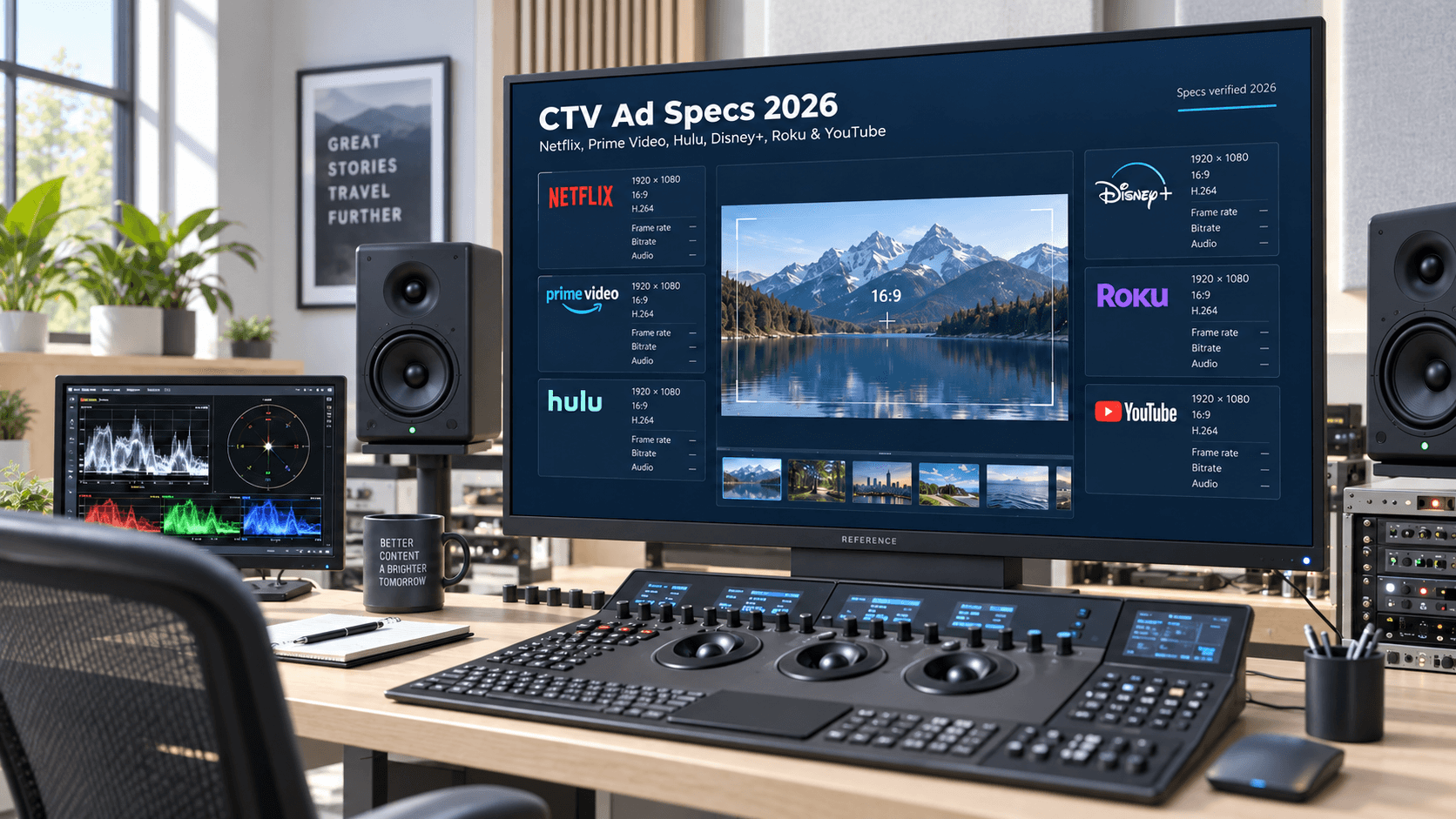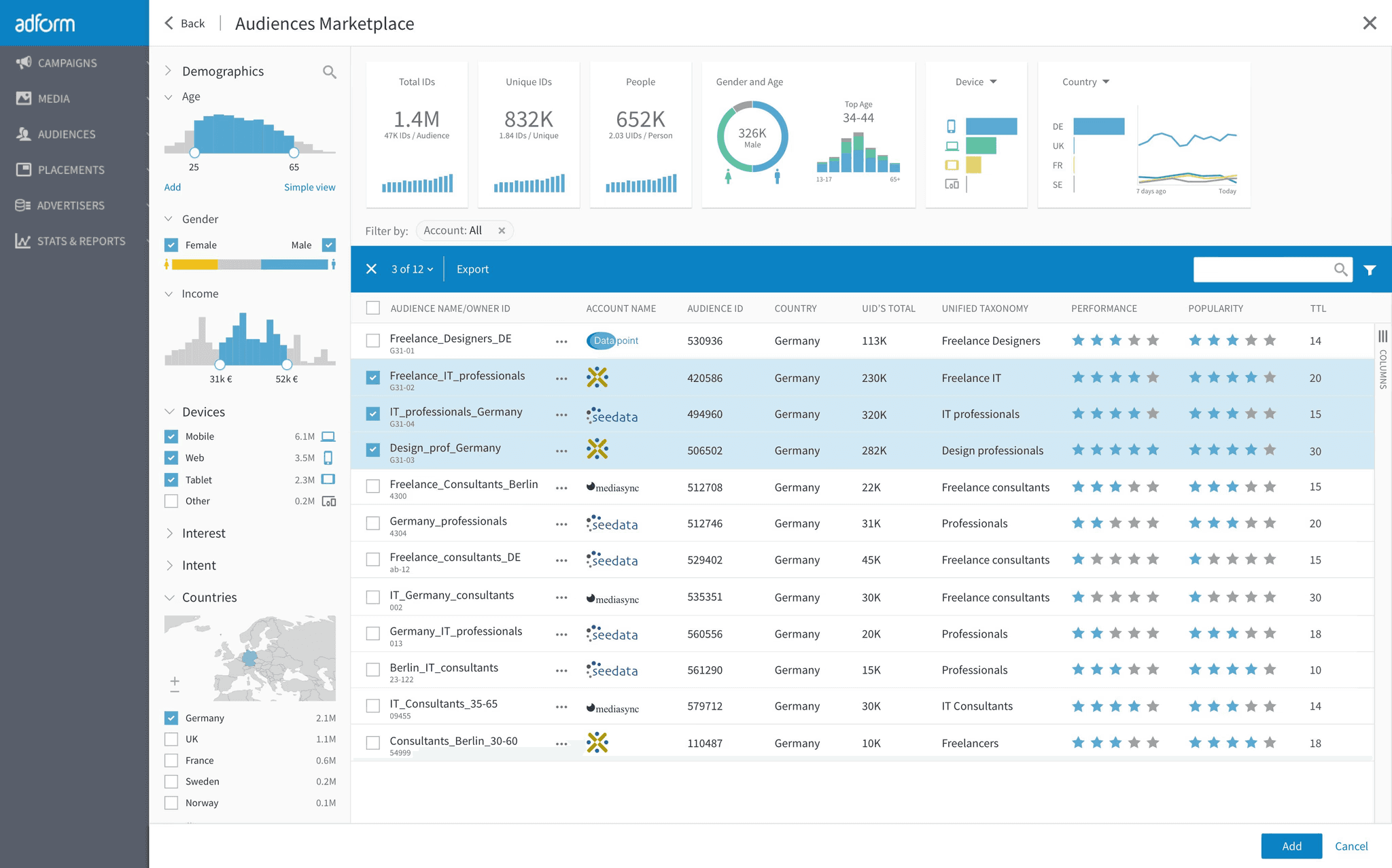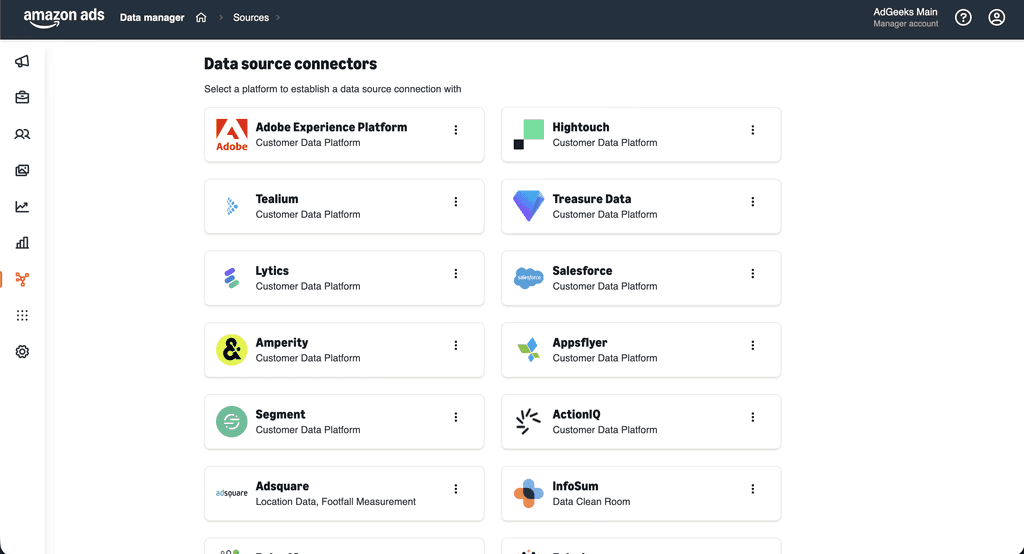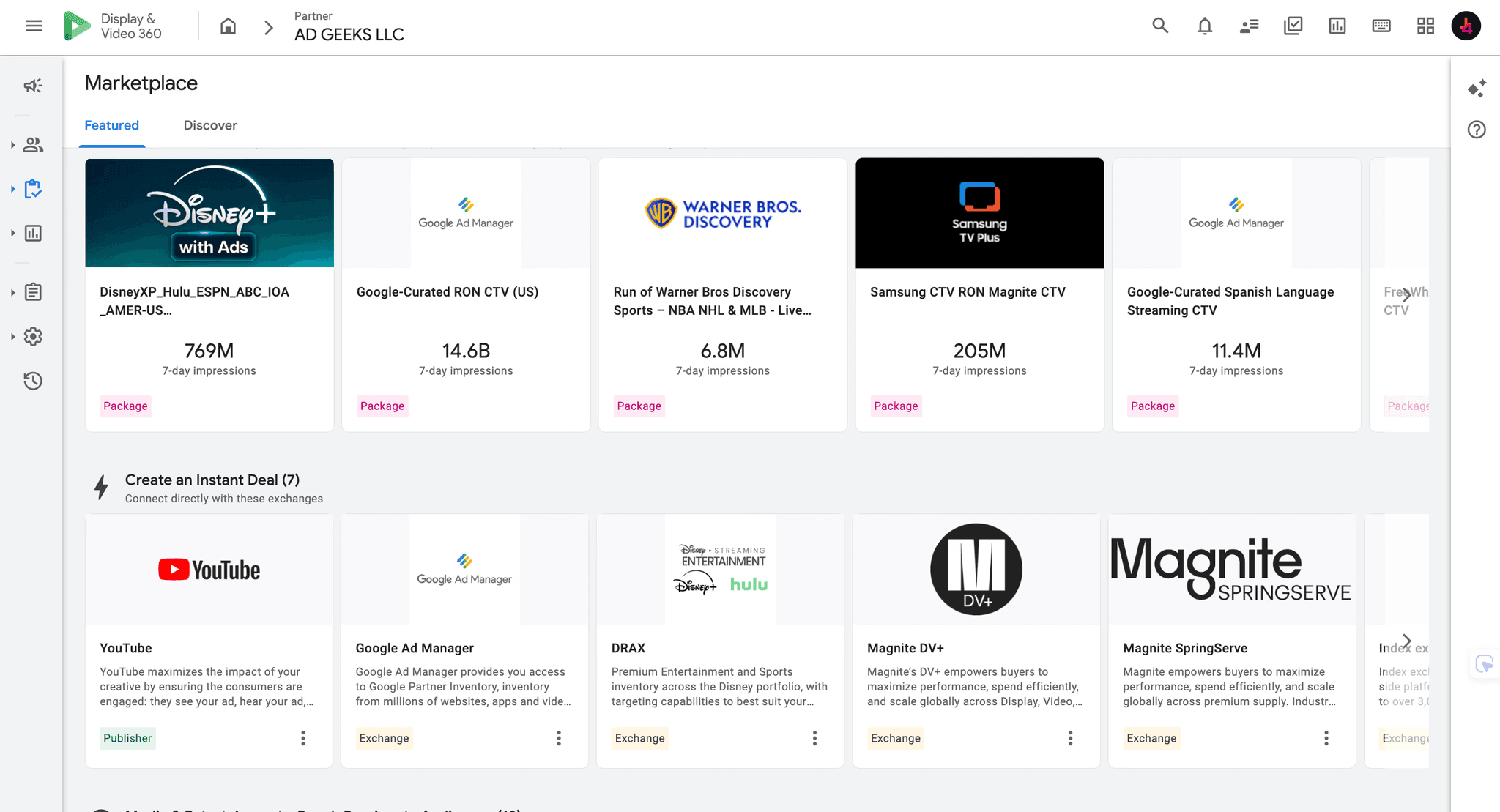
Last verified: September, 2026
Premium connected TV inventory is not distributed like standard display inventory. A streaming service may be available through its own sales team, a native buying platform, one or more DSP integrations, and private marketplace deals at the same time. Access can also change by country, advertiser type, campaign size, data permissions and commercial agreement.
That makes the question “Which DSP has Netflix, Prime Video or Disney+?” harder than it appears. The practical answer is not a single permanent logo grid. It is an inventory map that separates confirmed buying routes from access that must be enabled through a private deal.
This guide maps the main premium CTV environments to their most relevant buying routes in 2026. It is designed for advertisers and agencies planning campaigns across DV360, Amazon DSP, The Trade Desk and publisher-owned platforms.
Important: Availability is market- and account-specific. A streamer appearing in a DSP does not guarantee that every advertiser can activate it, that every show or live event is included, or that the same targeting and measurement options are available in every country. Always validate the deal ID, geography, device coverage, content exclusions and measurement terms before launch.
Quick answer: There is no single DSP that provides identical access to every premium streamer. Amazon DSP is the primary route for Prime Video and has expanded access to selected third-party CTV supply. DV360 is the native programmatic route for YouTube and YouTube TV environments and can activate selected publisher deals. The Trade Desk is widely used for cross-publisher CTV buying, but premium streamer access is usually deal-based. Netflix supports direct buying and selected programmatic DSP integrations, while Disney, NBCUniversal, Paramount and Warner Bros. Discovery often provision premium inventory through direct, programmatic-guaranteed or PMP agreements.
The safest planning method is to choose the streamer first, confirm its market-specific buying route, and then select the DSP that provides the required deal, audience, measurement and frequency controls.
Premium CTV Inventory Map: Streamer by Buying Route
Streamer or inventory group | Primary / native buying route | Other programmatic route | Access type to expect | Key caveat |
|---|---|---|---|---|
Netflix | Netflix direct / Netflix Ads Suite | Selected DSP integrations, including major enterprise DSP partners where enabled | Direct IO, programmatic guaranteed or private deal | DSP and market availability must be confirmed; do not assume open exchange |
Prime Video | Amazon DSP / Amazon Ads | Direct Amazon Ads agreement | Managed service, reserved or programmatic activation through Amazon | Amazon DSP is the core route; availability and formats vary by country |
Disney+ | Disney Advertising / Disney Real-Time Ad Exchange | Approved DSP integrations and private deals | Direct, PG or PMP | Disney+ access, targeting and markets differ from Hulu and the wider Disney portfolio |
Hulu | Disney Advertising / Disney Real-Time Ad Exchange | Approved DSP integrations and private deals | Direct, PG or PMP | Primarily a US inventory decision; not interchangeable with global Disney+ access |
ESPN / Disney portfolio video | Disney Advertising | Approved DSP integrations and private deals | Direct, PG or PMP | Live sports and tentpole inventory may require separate commitments |
Roku Channel / Roku home-screen inventory | Roku Ads / Roku buying tools | Amazon DSP integration and selected third-party deals where provisioned | Direct, reserved, PG or PMP | Roku platform inventory, Roku Channel inventory and third-party apps are different supply sets |
YouTube on connected TV | Google Ads or Display & Video 360 | Google reservation products | Auction, reservation or programmatic guaranteed, depending on product | YouTube inventory is not generally bought through independent DSPs |
YouTube TV / YouTube Select CTV lineups | Google / DV360 | Direct Google reservation route | Reservation, PG or auction where eligible | Lineup, geography and live-TV availability require confirmation |
Peacock | NBCUniversal One Platform | Approved DSP through a provisioned deal | Direct, PG or PMP | Premium shows, sports and live events may have separate rules and minimums |
Paramount+ / Pluto TV / EyeQ | Paramount Advertising | Approved DSP through EyeQ or publisher-provisioned deals | Direct, PG or PMP | Paramount+, Pluto TV and the wider EyeQ bundle should be requested separately in planning |
Max / Warner Bros. Discovery streaming | Warner Bros. Discovery Advertising | Approved DSP through publisher-provisioned deals | Direct, PG or PMP | Max availability differs by market and may not equal the full WBD streaming portfolio |
Tubi | Tubi / FOX Advertising | Approved DSP and private marketplace routes | Direct, PG or PMP | Confirm whether the deal covers Tubi only or a broader FOX portfolio |
Samsung TV Plus | Samsung Ads | Selected third-party PMPs where enabled | Direct, managed or PMP | Samsung TV Plus content inventory and Samsung ACR-based audience products are separate products |
LG Channels | LG Ad Solutions | Selected third-party PMPs where enabled | Direct, managed or PMP | Device data, FAST inventory and off-device extension should be scoped separately |
How to read the map: “Approved DSP” does not mean the inventory is permanently visible to every seat. In premium CTV, the publisher or supply partner commonly creates a deal for a specific advertiser, agency seat, country and date range. The DSP is then the execution layer - not proof that access exists by default.
Why Premium CTV Inventory Is Fragmented
Premium streaming publishers protect their inventory for three reasons: content rights, viewer experience and commercial control. Unlike open-web video, the publisher often controls ad load, competitive separation, frequency, creative review and measurement partners.
The same streamer can therefore have several buying paths:
Direct insertion order: negotiated with the publisher or its sales house.
Managed service: the publisher or an agency operates the campaign for the advertiser.
Programmatic guaranteed: reserved inventory and fixed pricing executed through a DSP.
Private marketplace: invited inventory with negotiated or floor-based pricing.
Curated marketplace: multiple premium publishers packaged through a supply or curation partner.
Auction access: available only where the publisher permits biddable buying.
These routes are not equivalent. Direct and guaranteed deals may unlock better forecasting, sponsorships or live-event access, while biddable deals may provide more flexible optimization. The best route depends on the campaign objective, not only the CPM.
Netflix: Which DSP Can Buy Netflix Ads?
Netflix combines its own advertising stack with selected programmatic buying integrations. In practice, advertisers may buy through Netflix directly or through an enabled enterprise DSP integration, depending on the country and commercial setup.
Do not treat “Netflix is available programmatically” as a universal promise. Before planning spend, confirm:
the advertiser and country are eligible;
the selected DSP and agency seat can receive the deal;
the format is standard video, pause ad, sponsorship or another product;
content and genre exclusions are documented;
Netflix-approved measurement partners are available;
creative has passed Netflix review.
For a deeper buying-path overview, see Netflix Advertising Through DV360 in 2026.
Prime Video: Amazon DSP Is the Core Route
Prime Video advertising is most directly connected to Amazon Ads and Amazon DSP. This route combines Prime Video supply with Amazon audience signals, frequency controls and measurement products where available.
Prime Video should be scoped separately from the broader Amazon streaming-TV portfolio. A campaign labeled “Amazon Streaming TV” may include a mix of Amazon-owned services, Fire TV supply and third-party streaming publishers. If the brief specifically requires Prime Video, request explicit Prime Video inclusion and reporting.
Confirm the following before launch:
whether the campaign buys Prime Video specifically or a broader streaming-TV package;
countries, content categories and live-event inclusion;
reserved versus biddable delivery;
household frequency settings across Amazon properties;
available first-party audience and measurement options.
Read the Prime Video Advertising Guide for format and activation details.
Disney+, Hulu and ESPN: One Portfolio, Different Inventory Decisions
Disney Advertising can connect advertisers to Disney+, Hulu, ESPN and other Disney video environments, but these services should not be treated as one interchangeable pool.
Hulu is primarily a US streaming decision. Disney+ has a broader international footprint, while ESPN and live sports can require separate inventory commitments, creative rules and measurement plans. Disney’s programmatic infrastructure can support approved DSP deals, but availability depends on the property, market and agreement.
Ask for a deal-level breakdown showing:
Disney+ impressions;
Hulu impressions;
ESPN or live-sports impressions;
entertainment versus kids/family content controls;
market and language;
direct, guaranteed or biddable buying method.
Without that breakdown, a “Disney portfolio” line item may not answer where the ads actually ran.
Roku: Separate the Platform, the Roku Channel and Third-Party Apps
Roku is both a TV operating environment and a media owner. That distinction matters.
An advertiser may buy:
The Roku Channel inventory;
Roku home-screen and native placements;
streaming inventory from third-party apps on Roku devices;
audience products based on Roku viewing signals;
publisher deals activated through a DSP.
Roku’s native advertising tools are the clearest route to Roku-owned placements. Amazon DSP also has an announced integration with Roku that expands authenticated CTV planning and activation. Other DSP access should be validated at the specific deal level rather than assumed from the presence of Roku devices.
YouTube on TV: Google Ads and DV360
YouTube connected-TV inventory is a Google buying environment. The main activation routes are Google Ads, Display & Video 360 and direct Google reservation products.
This makes YouTube different from publisher inventory that can be exposed to several independent DSPs. If an advertiser requires YouTube on television screens, DV360 or Google Ads should be part of the plan.
Important planning distinctions include:
YouTube viewed on connected-TV devices versus all-device YouTube;
YouTube Select lineups versus broader auction inventory;
YouTube TV or live-content availability;
skippable, non-skippable, bumper and reservation formats;
household reach and frequency reporting.
Independent DSPs may reach many premium CTV publishers, but they should not be presented as a substitute for native YouTube buying.
Peacock, Paramount+ and Max: Publisher Deals Matter More Than the DSP Logo
Peacock, Paramount+ and Max are commonly planned through their publisher sales organizations and approved programmatic deal paths:
Peacock: NBCUniversal One Platform and provisioned programmatic deals.
Paramount+: Paramount Advertising, often planned alongside Pluto TV and the EyeQ portfolio.
Max: Warner Bros. Discovery Advertising and approved deal-based activation.
For these publishers, the key question is not “Does the DSP have a CTV button?” It is “Can this advertiser’s seat receive the correct publisher deal in the required market?”
Live sports, premieres, sponsorships and tentpole programming may be sold separately from general entertainment inventory. Forecast and pricing should therefore be approved before the campaign is committed.
FAST Inventory: Tubi, Samsung TV Plus, LG Channels and Pluto TV
Free ad-supported streaming television (FAST) can add reach beyond subscription streamers, but platform labels still require care.
Tubi is sold through Tubi/FOX advertising routes and approved programmatic deals.
Pluto TV is part of Paramount’s advertising portfolio and may be offered directly or within EyeQ packages.
Samsung TV Plus can be bought through Samsung Ads and selected programmatic arrangements.
LG Channels can be accessed through LG Ad Solutions and selected private deals.
A FAST deal should specify the named service, geography, app/device environment and whether delivery includes off-service audience extension. “FAST inventory” alone is too broad for a transparent media plan.
DV360 vs Amazon DSP vs The Trade Desk for Premium CTV
DSP | Strongest strategic role | Premium CTV advantage | Main limitation to plan around |
|---|---|---|---|
Display & Video 360 | YouTube plus multi-publisher programmatic planning | Native YouTube access, Google measurement stack and publisher deals in one workflow | Prime Video is not a native DV360 environment; premium publisher deals still require provisioning |
Amazon DSP | Prime Video and Amazon streaming-TV ecosystem | Native Prime Video route, Amazon audiences and expanding third-party CTV relationships | The broader Streaming TV product should not be assumed to equal named Prime Video delivery |
The Trade Desk | Cross-publisher premium CTV and independent media buying | Strong deal activation, identity, frequency and open-internet CTV planning | YouTube is not an independent-DSP supply source; named streamer deals remain market-specific |
Publisher-owned platform | Deep access to one media owner | Native formats, forecasting, sponsorships and first-party publisher data | Harder to manage cross-publisher frequency and consolidated reporting |
For a broader platform comparison, read DV360 vs Independent DSPs.
How to Choose the Right DSP Mix
1. Start with named inventory
List the streamers that are mandatory, preferred and optional. “Premium CTV” is not specific enough for trafficking or reporting.
2. Confirm geography
A streamer’s ad-supported tier and DSP integrations may exist in one country but not another. Build the map market by market.
3. Request the buying route
For each streamer, document direct IO, managed service, programmatic guaranteed, PMP or auction.
4. Match each deal to the correct seat
Record the DSP, partner ID, advertiser ID, seat ID, deal ID, currency, dates and allowed devices. A deal sent to the wrong seat is not usable inventory.
5. Build a shared frequency plan
Each publisher can control frequency inside its own environment, but cross-publisher household frequency requires DSP-level planning and still may not be perfectly deduplicated.
6. Define measurement before launch
Confirm whether the publisher permits third-party verification, brand lift, conversion measurement, clean-room analysis or household-level reporting. Measurement permissions can differ from media access.
Premium CTV Deal Checklist
Before accepting a proposal or activating a deal, capture:
named streamer or inventory bundle;
country and language;
DSP and seat ID;
deal ID and deal type;
floor or fixed CPM;
guaranteed volume, if applicable;
start and end dates;
device and app coverage;
content, genre and live-event inclusion;
competitive separation;
frequency cap and counting method;
creative duration and approval timeline;
measurement and verification partners;
cancellation and underdelivery terms;
reporting dimensions available after launch.
If any of these fields is missing, the inventory map is not yet activation-ready.
Common Planning Mistakes
Assuming every DSP has the same streamer access
Two DSPs may both show CTV supply while offering different publishers, markets, deal types and measurement rights.
Confusing a portfolio bundle with a named streamer
Amazon Streaming TV, Disney portfolio, Paramount EyeQ or premium CTV marketplace labels do not automatically guarantee delivery on one named service.
Treating device reach as app inventory
Reaching households that own Roku, Samsung or LG televisions is not the same as buying The Roku Channel, Samsung TV Plus or LG Channels.
Ignoring live-event rules
Sports and tentpole programming may have separate pricing, creative deadlines and sponsorship restrictions.
Launching before deal validation
Deal troubleshooting should happen before creative approval and budget allocation, not on the campaign start date.
AdGeeks can build a market-by-market streamer access plan, validate the available DSP and deal route, and structure activation across DV360, Amazon DSP and approved publisher integrations. The output is a practical inventory map with named streamers, buying routes, deal dependencies, measurement options and launch requirements.
Frequently Asked Questions
Which DSP has the most premium CTV inventory?
No DSP has every premium streamer on identical terms. DV360 is essential for YouTube and useful for approved publisher deals. Amazon DSP is the core route for Prime Video and Amazon streaming-TV products. The Trade Desk is widely used for independent cross-publisher CTV buying. The best stack depends on the named streamers, countries and deal access required.
Can I buy Netflix through DV360?
Netflix supports selected programmatic integrations, and DV360 may be an eligible route where Netflix has enabled the market, advertiser and buying setup. Confirm current availability and request the correct deal before presenting Netflix as guaranteed inventory.
Can I buy Prime Video through DV360 or The Trade Desk?
Prime Video’s core programmatic route is Amazon DSP. Do not assume that a third-party DSP provides equivalent Prime Video access. If Prime Video is mandatory, confirm activation through Amazon Ads or an explicitly approved buying agreement.
Can The Trade Desk buy YouTube CTV inventory?
YouTube inventory is bought through Google Ads, Display & Video 360 or Google reservation products, not as standard independent-DSP supply. Use DV360 or Google Ads when YouTube on connected TVs is required.
Is Hulu inventory included when I buy Disney+?
Not automatically. Hulu and Disney+ are distinct inventory environments even when both are sold by Disney Advertising. Request separate delivery, pricing and reporting lines.
Does buying Roku inventory mean ads run on every Roku app?
No. Roku-owned placements, The Roku Channel, third-party streaming apps on Roku devices and Roku audience-extension products are different supply sets. The deal documentation should state exactly what is included.
Are premium streamer deals available in the open exchange?
Some biddable supply may exist, but the most controlled premium inventory is commonly sold through direct, programmatic-guaranteed or private marketplace agreements. Never infer named-streamer access from a generic open-exchange CTV line item.
How often should a CTV inventory map be updated?
Review it before every major campaign and at least quarterly. Streamer ad tiers, DSP partnerships, country availability, sports rights and measurement integrations change frequently.
Official and First-Party Sources
Source review completed September 22, 2026. Inventory access changes frequently; confirm the active trafficking sheet or deal terms before campaign launch.